
World Cup 2026 Group Stage: My Betting Verdicts for All 12 Pools
 Available in US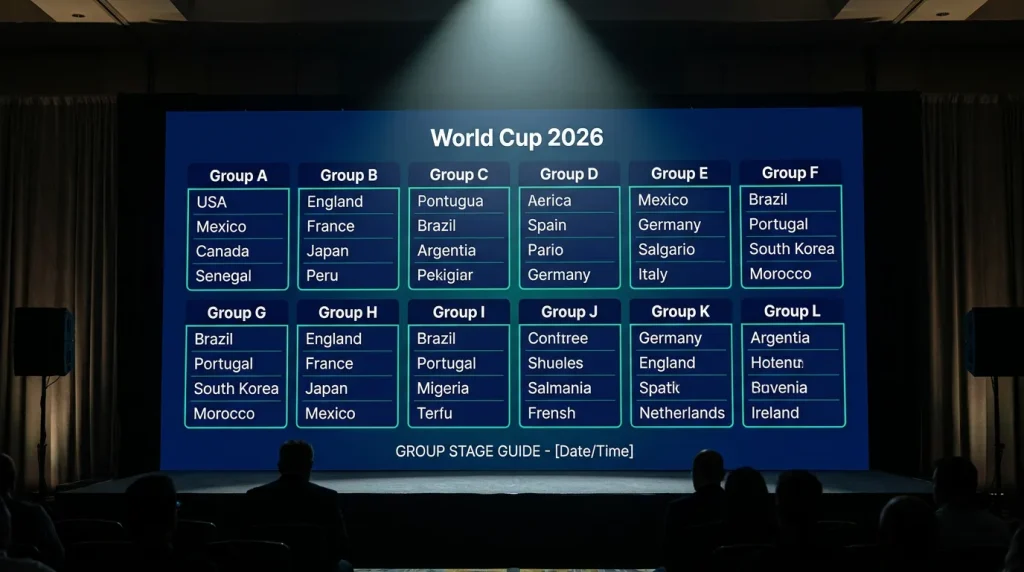
Table of Contents
When the draw was made in Washington in December 2025, I watched the balls fall from a pub in Melbourne at an unreasonable hour and scribbled my first reactions on a napkin. Three words dominated the page: “Group D — brutal.” As an Australian, that was personal. As a betting analyst, it was the start of a 48-hour deep dive into 12 groups that would define the structure of my entire World Cup 2026 groups portfolio.
The 2026 group stage is unlike anything we have seen at a senior FIFA World Cup. Twelve groups of four teams, with the top two from each group qualifying automatically and the eight best third-placed sides joining them in a Round of 32. That third-place pathway changes everything — the calculus of how many points you need to advance, the incentive structure of the final group match, the risk profiles of betting on qualification versus group winners. The old assumptions from 32-team World Cups no longer apply, and any punter who carries those assumptions into this tournament is working with outdated tools.
What follows is my betting verdict on every group in the draw. I rate each group on a 1-10 scale for “betting interest” — a composite measure of how many actionable betting opportunities I see, how tight the markets are, and how confident I am in my ability to separate the probable outcomes from the market’s pricing. Some groups are goldmines. Others are traps. Knowing the difference before the tournament starts is worth more than any individual tip.
The 48-Team Format and Why It Changes Everything
If you have been punting on World Cups since the 32-team era began in 1998, you developed an instinct for group stage dynamics that served you well for six consecutive tournaments. Four points almost always guaranteed qualification. Three points with a decent goal difference usually got you through. A team could afford to lose one match and still advance if they won the other two. Those instincts are now wrong — not slightly off, but fundamentally miscalibrated for a format that has never been tested at this level.
The shift from eight groups of four to twelve groups of four seems incremental on paper. It is not. The critical change is the third-place qualification pathway. In previous World Cups with groups of four — such as the 1986-to-1994 era with six groups — the best third-placed teams also advanced, and historical data from that period tells us something important: the points threshold for a best third-place finish was consistently lower than punters expected. At the 1994 World Cup, some third-placed teams advanced with just three points and a negative goal difference. The bar for survival was stunningly low because the mathematics of a four-team group with three matches per team mean that a single win can be enough to stay alive in the tournament.
For the 2026 format, 24 teams will qualify automatically — two per group — and eight of the twelve third-placed sides will also advance to make up a Round of 32. That means 32 of 48 teams progress beyond the group stage, or two-thirds of the entire field. The practical implication for betting is stark: backing a team to qualify from their group is now a much higher-probability proposition than it has been at any World Cup since the format expanded to 32 teams in 1998. A side priced at 3.50 to qualify from their group may be offering poor value even though the nominal payout looks attractive, because the true probability of qualification in a format this forgiving could be 50% or higher for any team outside the bottom tier of the draw.
The group winner market is where I see the most opportunity. Because qualification is relatively easy, the competitive tension within each group shifts from “who survives?” to “who finishes first?” — and finishing first matters enormously because it determines which side of the knockout bracket you land on. A group winner gets a more favourable Round of 32 opponent than a second-placed team, and that advantage compounds through each subsequent round. Bookmakers know this, and group winner prices are generally tighter than qualification prices, but the expanded field and the unfamiliarity of the format create pricing inefficiencies that would not exist in a well-understood 32-team structure.
The final group match dynamic also shifts in ways that affect specific betting markets. In a four-team group where two of three teams have already secured qualification after two matches, the third match becomes a battle for first place rather than survival. That changes the goal-scoring profile of those matches — teams chasing a top finish tend to play more attacking football, which inflates over/under goals markets. Conversely, matches where both teams are already eliminated tend to produce low-intensity fixtures with fewer goals. The 48-team format, with its generous qualification pathway, increases the probability of both scenarios occurring in multiple groups simultaneously, creating a matchday-three betting environment that is structurally different from what we have seen since 1998. Understanding that structural difference — and pricing it into your selections — is the advantage you carry into the World Cup 2026 odds landscape that most punters will miss entirely.
Groups A-D: Host Nation Pools Under the Microscope
The four host-nation groups carry a unique dynamic that every other pool in the draw lacks: at least one team playing on home soil with crowd support, travel familiarity, and the psychological lift that comes from representing the host country. In past World Cups, hosts have topped their group roughly 65% of the time — a rate that significantly exceeds what squad quality alone would predict. For the 2026 edition, three of these four groups contain a host nation, and the fourth — Group D — contains the primary host, the USA, playing the majority of their matches in front of 60,000-plus partisan fans. These are the groups where the home advantage premium is most directly relevant to betting, and they demand a different analytical lens than the neutral-venue pools.
Group A — Mexico, South Korea, South Africa, Czechia. Betting interest: 6/10. Mexico open the entire tournament at Estadio Azteca against South Africa, and that emotional moment — the first match of the first 48-team World Cup, in one of the most iconic football stadiums on the planet — gives Mexico a lift that is almost impossible to quantify but very real. I expect Mexico to top this group at a price that does not offer much value, which pushes my focus to the second-place battle between South Korea, South Africa, and Czechia. South Korea are the strongest of the three — their 2022 World Cup run, where they beat Portugal in the group stage, demonstrated genuine knockout quality — and they carry enough Premier League and Bundesliga-level players to be competitive. South Africa at a home World Cup in 2010 were eliminated in the group stage despite a strong opening match, and their squad for 2026 is not materially stronger than that vintage. Czechia, who qualified through the UEFA playoff, are a disciplined side but lack the individual quality to threaten the top two. My pick: Mexico first, South Korea second, and the value bet is South Korea to qualify at whatever price the market offers north of 1.70.
Group B — Canada, Switzerland, Qatar, Bosnia and Herzegovina. Betting interest: 5/10. This is the quietest of the host-nation groups, and that is not necessarily a bad thing for betting purposes. The market will lavish attention on Groups C and D while pricing Group B as an afterthought, and afterthoughts are where mispricing tends to hide. Switzerland are the strongest team in this pool on squad quality — a consistent Round of 16 team at recent major tournaments — but Canada’s home advantage at BMO Field in Toronto could swing the group winner market. Qatar, the 2022 hosts, were the worst-performing host nation in World Cup history, losing all three group matches and scoring one goal. Without home advantage, their prospects in 2026 are bleak. Bosnia, qualified through the playoff, have quality in Edin Džeko — if he is still active — but lack the depth to compete across three matches. I see Switzerland topping this group and Canada qualifying second, with the group winner market the most attractive angle.
Group C — Brazil, Morocco, Haiti, Scotland. Betting interest: 7/10. This is the group that excites me most in the first tier. Brazil are clear favourites but carry the baggage of underperformance at recent World Cups, while Morocco arrive as 2022 semi-finalists with a squad that has matured since Qatar. The Brazil-Morocco head-to-head is the marquee group stage fixture in the entire tournament from a betting perspective — two teams with genuine knockout pedigree meeting in the group phase, where the outcome determines bracket positioning for both. Haiti, the tournament debutants, and Scotland, returning to the World Cup for the first time since 1998, are unlikely to trouble the top two but could influence goal difference in ways that swing the group. My pick: Morocco to push Brazil all the way for first place, and the value bet is Morocco group winner at odds that should sit between 4.00 and 5.00. Brazil’s group stage record since 2014 — eliminated on goal difference in 2014, topped the group in 2018, topped in 2022 — is not as dominant as their reputation suggests.
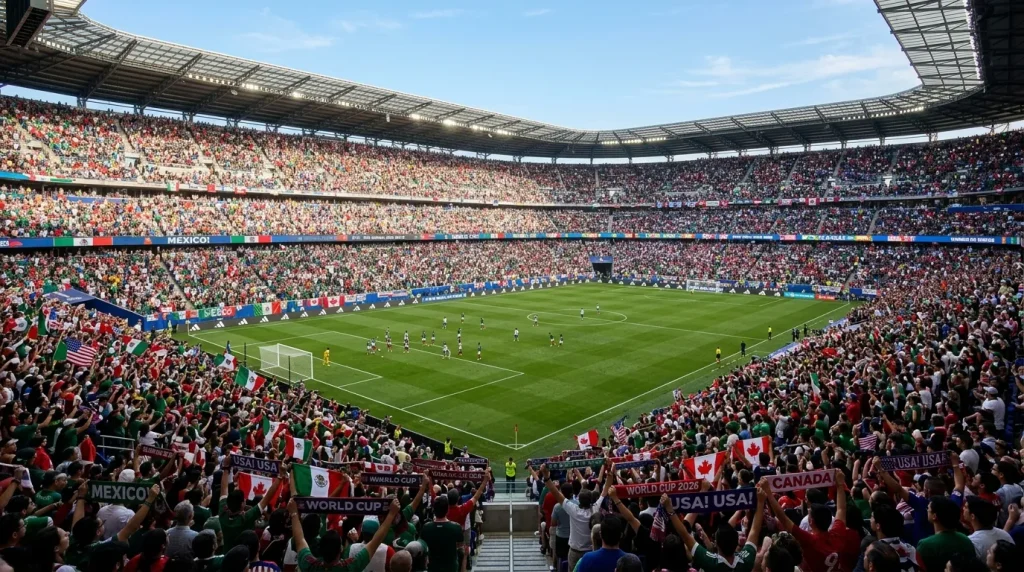
Group D — USA, Paraguay, Australia, Türkiye. Betting interest: 9/10. I have written more words about this group than any other in the draw, and the reason is simple: it is the most competitive host-nation pool at the tournament and the one that directly affects every Australian punter reading this page. The USA are favourites — home advantage, strong squad, a schedule that gives them the best venues — but they are not overwhelming favourites. Türkiye’s return after 24 years brings Real Madrid and Inter-level talent into a group where they could realistically finish anywhere from first to fourth. Paraguay, hardened by CONMEBOL qualifying, will not roll over for anyone. And the Socceroos carry the confidence of Qatar 2022, where they proved that Australia can compete at this level against higher-ranked opponents. The qualification scenarios are fascinating: the top two advance automatically, and a third-place finish with four points — one win and one draw — would almost certainly be enough for best-third qualification. That means every team in this group can realistically plan for knockout stage football, and the betting markets reflect that competitive balance with tight pricing across the board. The group winner market, the match result markets, and the exact finishing order market all offer genuine opportunities. For a detailed breakdown of every angle, including match-by-match AEST scheduling and specific value picks, the Group D betting preview covers the terrain I cannot compress into a single paragraph here.
Groups E-H: Stacked Talent, Thin Value
These four groups contain the heaviest concentration of traditional football powers in the draw, and that is precisely why the betting value is thinner than in the host-nation pools. When bookmakers price a group containing Germany, or the Netherlands, or Spain, they have decades of World Cup data to calibrate their models against. The pricing is tighter, the margins are smaller, and the probability of finding a genuine edge is reduced. That does not mean there is nothing to bet on — it means you need to look harder and be more selective.
Group E — Germany, Côte d’Ivoire, Ecuador, Curaçao. Betting interest: 5/10. Germany are heavy favourites, and after two consecutive group-stage exits, the pressure on this squad to perform is immense. I expect that pressure to produce a focused, disciplined Germany that tops this group with relative comfort. The second-place battle between Côte d’Ivoire and Ecuador is where the interest lies. Côte d’Ivoire won the 2024 Africa Cup of Nations as hosts, demonstrating the capacity to perform in tournament football, and their squad includes genuine quality in Sébastien Haller and Franck Kessié. Ecuador qualified directly through CONMEBOL — an achievement that speaks to consistency and resilience — and their recent World Cup record includes a 2022 group stage where they took four points from three matches before exiting on goal difference. Curaçao are a tournament debutant with a population of 150,000 — their presence is a celebration of the expanded format, but their competitive ceiling is a single point from a drawn match. My pick: Germany first, and the Côte d’Ivoire-Ecuador battle for second is a coin flip that I would lean toward Ecuador at the right price, purely on the basis of CONMEBOL qualifying form being a stronger predictor than continental championship results.
Group F — Netherlands, Japan, Tunisia, Sweden. Betting interest: 8/10. This is the best neutral-venue group in the tournament for betting purposes, and it starts with the Netherlands-Japan fixture — a match that could genuinely go either way. I rated Japan at 6/10 in my team power ratings, which might seem generous for a side that the market consistently prices as a second-tier team, but their 2022 World Cup performances against Germany and Spain were not flukes. Japan’s pressing intensity, tactical discipline, and the quality of their European-based players make them a legitimate threat to top any group they are placed in. The Netherlands, as discussed, have the superior individual talent but a history of fading in knockout rounds. Tunisia are a stubborn, well-organised African side who will frustrate opponents and steal points, while Sweden — back at the World Cup through the UEFA playoff — lack the creative spark of their 2018 vintage. The value here is Japan to top the group, which should be priced between 3.50 and 4.50 depending on the bookmaker. If you watched Japan’s qualifying campaign and their 2022 tournament closely, those odds represent a meaningful probability gap.
Group G — Belgium, Egypt, Iran, New Zealand. Betting interest: 4/10. The lowest-rated group in this tier, and the reason is straightforward: Belgium should win it, Egypt should qualify second, and the gap between those two and the remaining pair is wide enough that the competitive tension is limited. Belgium’s golden generation is ageing, but Kevin De Bruyne at 35 remains one of the most creative midfielders in football, and in a group that does not require maximum effort, his workload can be managed across three matches. Egypt bring Mohamed Salah and a passionate travelling support, but their World Cup record — one goal in seven group-stage matches across their last two appearances — suggests a team that competes hard but lacks the cutting edge to threaten the top spot. Iran are a perennial Asian qualifier who keep the scoreboard tight and frustrate opponents, and they could take points off Egypt if the match falls into a low-tempo pattern. New Zealand are the weakest team in the group on squad quality and international experience. My pick: Belgium first, Egypt second, and there is not enough uncertainty in this group to justify significant betting exposure.
Group H — Spain, Saudi Arabia, Cabo Verde, Uruguay. Betting interest: 7/10. Spain as group favourites feel like a formality — the 2024 European champions, playing the most attractive football of any team in the draw, should navigate this pool without alarm. The intrigue is in the second and third positions, and specifically in Uruguay’s presence as a pot-three team. Uruguay’s FIFA ranking and seeding position at this tournament are a direct consequence of their qualifying results, but their squad — Darwin Núñez, Federico Valverde, Ronald Araújo — is significantly stronger than a pot-three allocation suggests. Uruguay should be competing for the group win, not scrapping for qualification, and the market’s pricing of Uruguay as a clear second behind Spain may undervalue their chances of topping the group if Spain rotate heavily in the final fixture. Saudi Arabia’s 2022 victory over Argentina remains one of the greatest World Cup upsets, but repeating that against Spain or Uruguay in a more favourable tournament setting is a different proposition. Cabo Verde, the island nation making their World Cup debut, are the feel-good story of the draw but unlikely to take more than a single point. The value bet: Uruguay to top the group at odds that should sit between 3.00 and 4.00, particularly if the match schedule has Spain already qualified before the final fixture.
Groups I-L: Where the Smart Money Goes
The final four groups in the draw are where I allocate the largest share of my group-stage betting budget. The reason is structural: these pools contain a mix of elite favourites and underpriced second-tier teams, and the market’s attention is disproportionately focused on the headline groups — A through H — leaving the I-to-L pools slightly less efficiently priced. In nine years of covering tournament betting, I have found that the groups drawing the least public interest consistently produce the best value.
Group I — France, Senegal, Norway, Iraq. Betting interest: 6/10. France are prohibitive favourites, and the market has priced them accordingly — group winner odds below 1.50 in most books, which offers no value whatsoever. The interest here is exclusively in the second-place race. Senegal, runners-up at the 2022 Africa Cup of Nations and quarter-finalists at the 2022 World Cup, have a squad that blends European league experience with tournament toughness. Norway, led by Erling Haaland — the most prolific striker in world football — present a fascinating test case: can a team built around a single generational talent compete at the World Cup against sides with greater overall squad balance? Iraq, qualified through the intercontinental playoff, will struggle to take points off any of the other three but could influence the group dynamic by putting up stubborn defensive performances. My pick: France first, Senegal second, and the value angle is backing Haaland’s Norway at a price that implies a lower qualification probability than their squad deserves. Norway to qualify from the group at odds around 2.00-2.20 looks attractive — they need to finish second or claim a best-third spot, and with Haaland leading the attack, they have the individual quality to beat Senegal or Iraq in a decisive match.
Group J — Argentina, Algeria, Austria, Jordan. Betting interest: 5/10. Argentina as defending champions make this group feel like a foregone conclusion, and in all honesty, it probably is. Lionel Scaloni’s side are the best-drilled international team in the world, and the group draw has given them a comfortable path to the knockout rounds. Algeria are the strongest second seed, with a squad that draws from Ligue 1, Serie A, and the Premier League, but their World Cup record since their impressive 2014 group stage has been underwhelming — they failed to qualify for 2018 and 2022. Austria have a solid Bundesliga-based core and the tactical organisation of Ralf Rangnick’s system, which produced an encouraging 2024 European Championship campaign. Jordan are the fairytale qualifiers — their first World Cup appearance — and will bring passion and organisation but lack the individual quality to compete at this level over three matches. The group winner market is dead — Argentina at 1.30 is not a bet, it is a donation to the bookmaker. The second-place battle between Algeria and Austria offers marginal interest, with Austria’s tactical sophistication under Rangnick giving them a slight edge. I would look at Austria to finish second in the group at odds around 2.50-3.00 as the only actionable bet in this pool.
Group K — Portugal, Colombia, Uzbekistan, DR Congo. Betting interest: 7/10. This group is a sleeper for value. Portugal and Colombia are the two strongest teams, and the market will price them as clear qualifiers — but the head-to-head between them is far closer than most punters appreciate. Colombia, under the current coaching regime, have become one of the most well-organised teams in South American football. Their CONMEBOL qualifying campaign was built on defensive discipline and efficient transitions, and their squad includes James Rodríguez — still a World Cup-level performer in an advanced playmaking role — alongside a younger generation of dynamic attackers. Portugal’s transition from the Cristiano Ronaldo era means this side is less individually dominant but more collectively balanced, and the pricing of the Portugal-Colombia match result market should offer genuine opportunities. Uzbekistan are an underrated Asian qualifier with the capacity to take points off a complacent opponent, and DR Congo, qualified through the intercontinental playoff, bring raw athleticism and a fanatical travelling support. My pick: the Colombia group winner market is the best bet in this group. If Colombia can take at least a point from Portugal and win their other two fixtures, topping the group is within reach, and the odds should be between 3.00 and 4.00 — generous for a team of their quality.

Group L — England, Croatia, Ghana, Panama. Betting interest: 7/10. England-Croatia is one of those World Cup fixtures that writes itself — the 2018 semi-final, the 2021 Euros group match, and now a third meeting at a major tournament in the space of eight years. England are favourites to top the group, and rightly so, but Croatia’s experience in World Cup knockout football — two semi-finals in the last three tournaments — means the gap between first and second in this group is narrower than the market pricing suggests. Croatia at 3.50-4.00 to win the group is a price that interests me, particularly because England have historically been slow starters at World Cups, dropping points in opening fixtures before finding their rhythm. Ghana and Panama are fighting for a possible third-place qualification spot, and Ghana’s greater World Cup experience — including a quarter-final run in 2010 — gives them the edge in that sub-battle. The value bet: Croatia to top the group, or the Croatia-England draw in their head-to-head match, which would set up a fascinating final matchday dynamic. For a more detailed analysis of the England-Croatia dynamic, the World Cup 2026 team ratings page covers both sides in depth.
Group Stage Betting Questions
The expanded format generates more questions than any previous World Cup, and most of them come back to the same theme: how does the 48-team structure change the way I should bet? Here are the answers I keep giving.
Twelve Groups, Four Bets I’d Back Right Now
Across twelve groups, I have identified dozens of potential angles, but the discipline of tournament betting is knowing which opportunities to act on and which to leave on the table. If I had to commit to four group-stage bets today — prices locked, no changes before kickoff — these are the selections I would back.
First: Morocco to win Group C at odds around 4.00-5.00. Brazil are the market favourites, but their group-stage record at recent World Cups is patchier than the name suggests, and Morocco’s 2022 semi-final run was built on a defensive foundation that is even stronger now. This is not a longshot — it is a genuine 25-30% probability event that the market is pricing at 20-25%.
Second: Japan to qualify from Group F at any price above 1.60. Japan beat Germany and Spain in the 2022 group stage. The Netherlands are a strong opponent, but Japan’s tactical system is specifically designed to neutralise possession-dominant European sides. The qualification pathway — top two or best third — is wide enough that Japan’s floor is high.
Third: Colombia to win Group K at odds between 3.00 and 4.00. Portugal are the market favourite, but Colombia’s CONMEBOL-forged discipline and the transitional state of Portuguese football create a window where the South Americans can top the group. The head-to-head match is the key fixture, and Colombia are better equipped for a tactical battle than the market appreciates.
Fourth: Croatia to finish above England in Group L at odds around 4.50-5.50. This is the most speculative of my four picks, but it rests on a pattern that has held across multiple tournaments: England start slowly. If Croatia take points from the opening fixture, the group dynamic shifts in their favour, and their experience of managing World Cup pressure exceeds England’s despite the gap in squad depth. The 2026 World Cup groups reward teams that peak at the right moment, and Croatia have proven repeatedly that they know how to do exactly that.
These four bets, placed at an average price of approximately 3.75, represent the kind of portfolio construction that has served me well across every tournament I have covered. Not every bet will land. The goal is not perfection — it is positive expected value across the set, which is the only sustainable approach to a 39-day tournament where volatility is guaranteed and certainty is a fantasy.
