
2026 FIFA World Cup Betting: The Punter's Complete Breakdown
 Available in US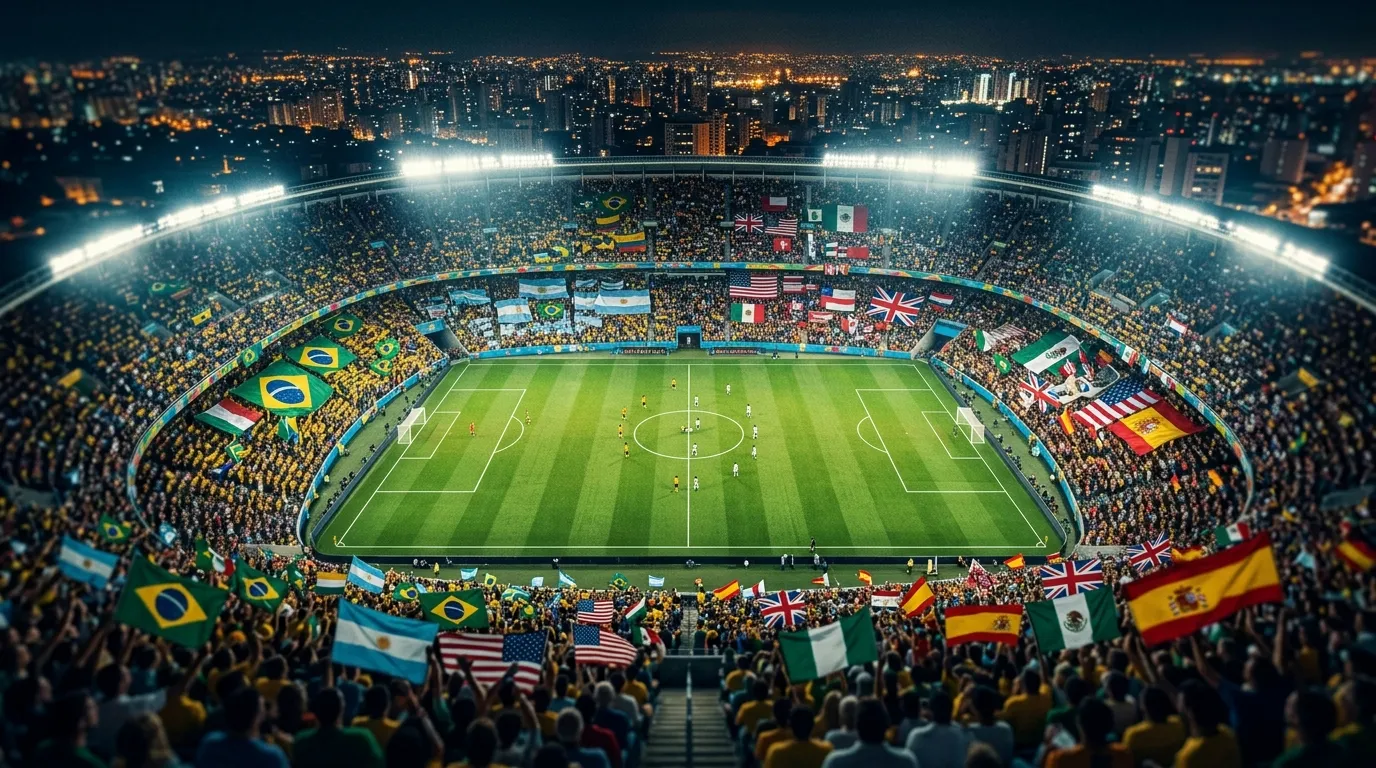
Five Things Every Aussie Punter Needs to Know Before June
- The 48-team format with 12 groups of four changes every assumption about group-stage betting — eight best third-placed teams qualify, making "safe" multis far less safe than you think.
- Australia's Group D draw pits the Socceroos against the USA, Turkiye and Paraguay — the toughest host-nation pool in the tournament, but third place still advances.
- Online in-play betting remains banned in Australia, which means pre-match analysis is not optional — it is the entire game for local punters.
- Outright winner odds across major bookmakers sit between 4.50 and 8.00 for the top six contenders, with genuine value hiding in the 15.00-30.00 range for dark horses peaking at the right moment.
- The April 2026 gambling advertising reforms reshape how Australians engage with World Cup betting content — know the new rules before the first whistle.
Nine years of covering international tournament wagering markets, and I have never seen a World Cup that scrambles the betting landscape this completely. The 2026 FIFA World Cup is not just bigger — 48 teams, 104 matches, three host nations — it is structurally different from every tournament that came before it. The format is new. The group dynamics are new. The qualification pathways are new. And for Australian punters specifically, the regulatory environment around 2026 World Cup betting has shifted in ways that demand attention before you place a single dollar.
I have spent the past eighteen months modelling Asian handicap lines, tracking squad transitions and watching qualification campaigns across six confederations. What I keep coming back to is this: the market has not caught up to the format change. Bookmakers are pricing the 2026 World Cup as though it were a 32-team event with extra noise, and that disconnect creates opportunities for punters who do their homework before kickoff.
This page is my complete breakdown of the tournament from a betting perspective — group ratings, outright value, Socceroos prospects, and the specific challenges facing Aussie punters who cannot touch an in-play market online. Everything here is built on pre-match analysis, because in Australia, that is the only edge available. I will point you toward deeper dives on individual teams, markets and strategies across the site, but this is where the picture comes together.
Tournament Snapshot: What's Changed for 2026
When FIFA announced the expansion to 48 teams back in 2017, my first reaction was scepticism — diluted competition, meaningless group matches, a cash grab dressed up as inclusion. I was wrong about the meaningless part. The 48-team World Cup format does not dilute the group stage; it warps it in ways that create genuinely new betting angles.
The structure works like this: 12 groups of four teams each, with the top two from every group advancing to the Round of 32, plus the eight best third-placed sides. That third-place pathway is the wrinkle that changes everything. In a traditional four-team group, finishing third meant elimination. Now, a single win and a decent goal difference might be enough to squeeze through. For punters, the implication is immediate — group winner markets carry less separation from the rest of the field, and "to qualify" bets become far more nuanced than a binary top-two finish.
The 2026 World Cup spans 39 days and 104 matches across 16 stadiums in three countries — the United States hosts 11 venues, Mexico contributes three and Canada two. It is the first World Cup held across three nations simultaneously.
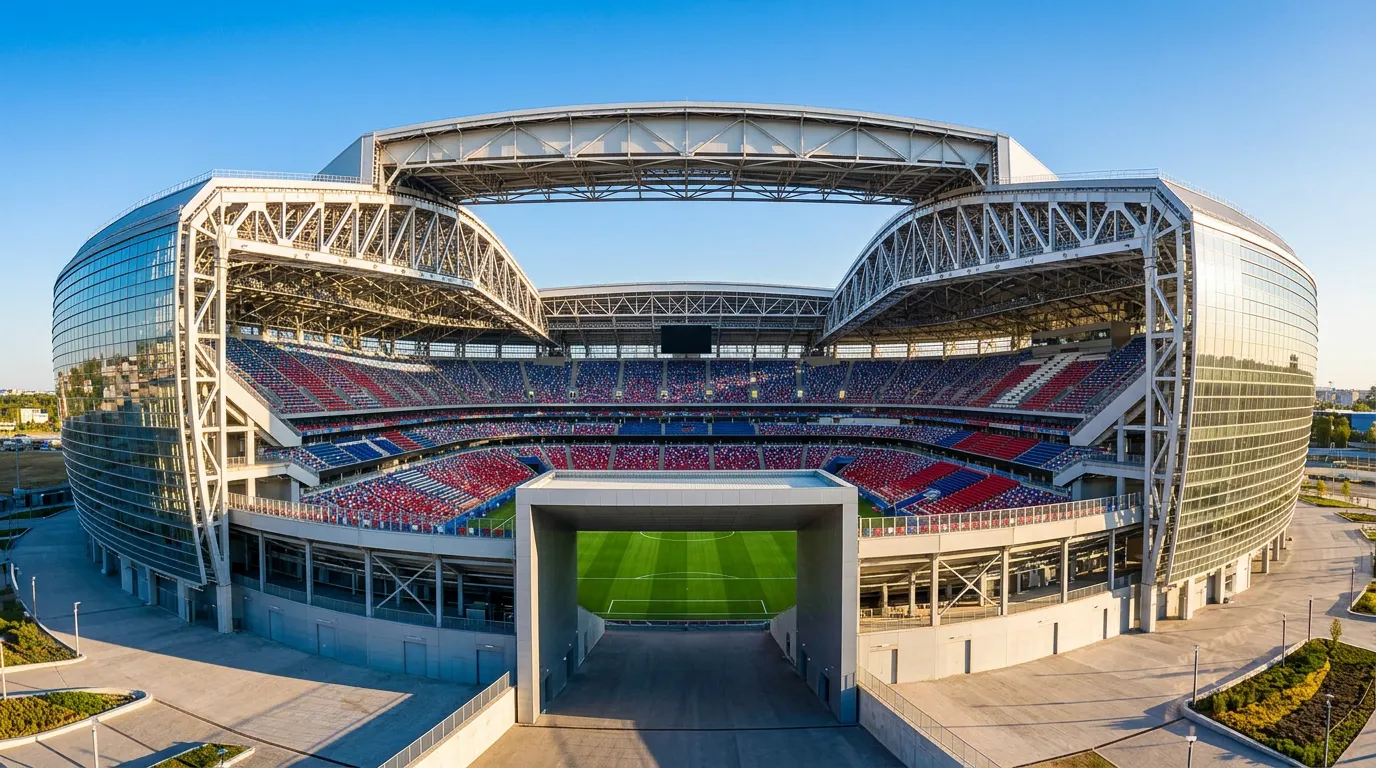
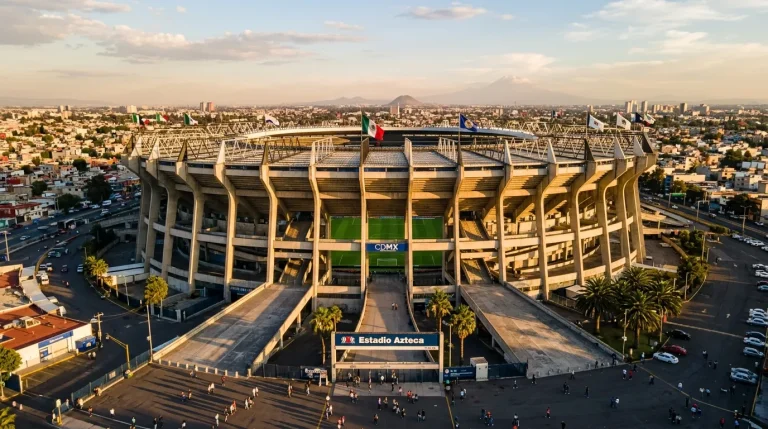
The tournament runs from 11 June to 19 July 2026. Mexico's Estadio Azteca — hosting its third World Cup — stages the opening match between Mexico and South Africa. The final takes place at MetLife Stadium in East Rutherford, New Jersey, a venue that seats over 82,000 and sits in the Eastern time zone, which translates to a 4:00 AM AEST kickoff if FIFA follows its traditional final scheduling. Between those bookends, the sheer volume of football is staggering: group-stage matchdays will feature up to six fixtures running simultaneously, with knockout rounds condensed into a bracket format that rewards depth and recovery more than any previous edition.
For the betting market, size matters. More matches means more data points, more line movements and more opportunities to find mispriced outcomes — but also more noise. The bookmakers I track have responded by widening their margins on group-stage exotics and tightening outright markets where volume is highest. That pattern tells me where the value sits: not in the headline markets everyone watches, but in the structural edges created by 48 teams navigating a format nobody has seen at senior level before.
The 48-team expansion does not just add games — it introduces a third-place qualification pathway that fundamentally changes how group-stage betting works. Punters who model for 32 teams will misprice outcomes.
The qualification picture locked in during March 2026 with the final playoff rounds. Six teams — Czechia, Bosnia and Herzegovina, Sweden, Turkiye, DR Congo and Iraq — secured the last spots, and their late arrival matters for betting. Late qualifiers carry momentum and match fitness, but they also lack the preparation time that teams who booked tickets months earlier have used for tactical refinement and squad planning. I factor that asymmetry into every group assessment below.
With the structural changes mapped, the real question becomes which groups offer value and which ones are traps — so let me walk you through all twelve.
My Group-by-Group Ratings
I rate every group on a 1-10 scale for "betting interest" — a composite of competitive balance, market inefficiency potential, and how many genuinely backable outcomes I can identify. A 10 means the group is a punter's playground with multiple angles. A 1 means the favourite cruises, the odds are razor-thin, and your money is better deployed elsewhere. These are subjective calls informed by nine years of watching tournament markets, so take them as a starting framework rather than gospel.
Groups A-D: The Host Nation Pools
Every host nation landed in a separate group through the seeding process, and the resulting four pools could not be more different in character. Group A is Mexico's opening act — Mexico, South Korea, South Africa and Czechia. I give it a 7/10 for betting interest. Mexico's home advantage at the Azteca is enormous, but South Korea have the squad depth and tournament experience to push them hard. Czechia qualified through the playoffs and carry the unpredictability that comes with a team playing on adrenaline. The value here sits in South Korea's qualification odds, which I think are too long for a side that reached the Round of 16 at Qatar 2022.
Group B features Canada, Switzerland, Qatar and Bosnia and Herzegovina. Betting interest: 5/10. Switzerland are the class act and should top the group comfortably. Canada benefit from home soil in Toronto and Vancouver, but their squad has gaps in central midfield that Switzerland and even Bosnia will exploit. Qatar, the 2022 hosts, were woeful in their own tournament — three losses, one goal scored — and nothing in their recent form suggests a turnaround. This group is straightforward at the top and messy at the bottom, which limits the angles.
The seeding system placed each host nation (USA, Mexico, Canada) into a separate group as the top seed, guaranteeing they avoid each other in the group stage. This creates structural advantages — home crowds, no travel fatigue, familiar climate — that the market prices in aggressively. Whether it overprices them is where the value question begins.
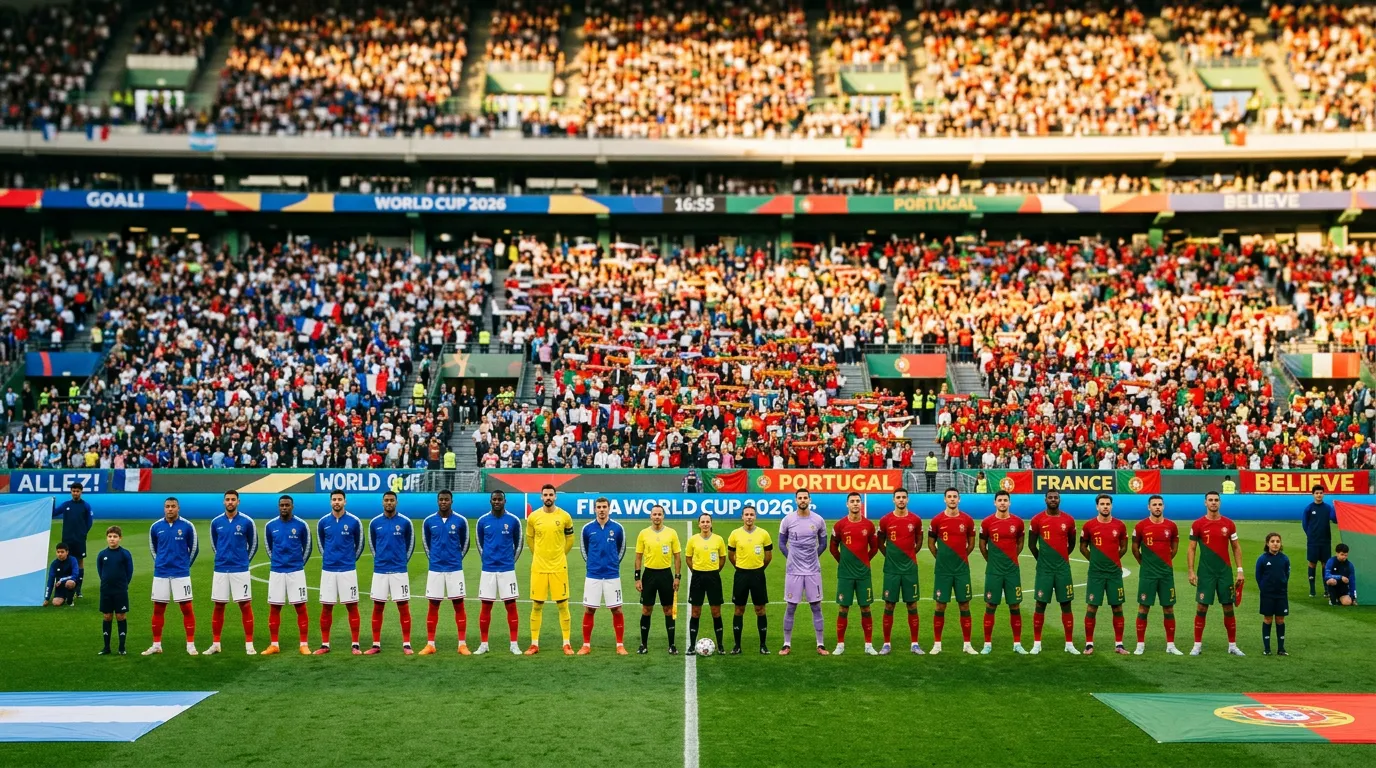
Group C pairs Brazil with Morocco, Haiti and Scotland. I rate it 6/10. Brazil are the obvious favourites, but their World Cup drought stretches back to 2002 and their recent tournament record includes quarter-final exits at both 2018 and 2022. Morocco's semi-final run in Qatar was no fluke — they have the defensive structure and the midfield quality to make this group uncomfortable. Scotland and Haiti are realistically competing for third place, and with the best third-placed pathway available, even a single upset result could see Scotland through. The Morocco angle interests me most.
Group D is the one keeping me up at night. The USA, Paraguay, Australia and Turkiye in a single pool — and every previewer I respect agrees this is the toughest host-nation group by some distance. I rate it 9/10 for betting interest. The USA have home advantage but face three opponents with genuine knockout-stage ambitions. Turkiye return to the World Cup for the first time since their remarkable 2002 campaign with a squad featuring Arda Güler and Hakan Çalhanoğlu. Paraguay ground through CONMEBOL qualifying in a way that screams resilience. And our Socceroos — more on them shortly — have the recent tournament pedigree of a Round-of-16 finish at Qatar 2022. Four teams, three realistic qualifiers, and a market that has not figured out the pecking order yet. That is where money gets made.
Groups E-H: The Heavyweights
Group E is Germany's proving ground alongside Côte d'Ivoire, Ecuador and Curaçao. Betting interest: 4/10. Germany need to redeem themselves after group-stage exits at both 2018 and 2022, and the draw has given them space to do exactly that. Curaçao are the weakest side in the tournament by ranking. Côte d'Ivoire won the 2024 Africa Cup of Nations and have enough quality to challenge for second place, but the market already reflects that. Ecuador sit in the uncomfortable middle — talented but inconsistent at the highest level. Unless you fancy Germany to stumble again, the value here is thin.
Group F — Netherlands, Japan, Tunisia and Sweden — earns a 7/10. Japan are the story. Their domestic league is producing players at an unprecedented rate, their tactical identity under the current coaching setup is the most aggressive in Asian football, and they gave both Germany and Spain serious problems at Qatar 2022. The Netherlands remain a top-ten side globally, but they lack a world-class number nine and their defensive record in recent qualifiers has been uncharacteristically porous. Japan to top Group F is the kind of bet I live for — underpriced quality in a format that rewards consistency over single-match brilliance.
Group G (Belgium, Egypt, Iran, New Zealand) rates 5/10. Belgium's golden generation — De Bruyne, Courtois, Lukaku — is ageing out, and the transition has been bumpy. Egypt's dependence on Mohamed Salah makes them volatile. Iran are tactically disciplined but limited in attack. New Zealand are here to compete, not to qualify. The group winner market is the only one worth touching.
Group H deserves an 8/10: Spain, Saudi Arabia, Cabo Verde and Uruguay. Spain's young core — Lamine Yamal, Pedri, Gavi — could peak at exactly the right tournament. Uruguay have the structure and the South American grit to push for top spot. Saudi Arabia shocked Argentina at Qatar 2022 and carry that energy into every group-stage match. Cabo Verde are the minnow, but in a format where third place qualifies, even they have mathematical life. The Spain-Uruguay match is a potential classic, and the qualification odds around Uruguay feel generous for a side ranked inside the world top fifteen.
Groups I-L: Value Hunting Ground
This is where I spend most of my time. Group I — France, Senegal, Norway and Iraq — rates just 5/10 despite France's presence. The reason is simple: France are too short in the outright group winner market to offer value, and the gap between them and the rest is wide enough that upsets require specific circumstances. Senegal are the second-best side but their odds reflect it accurately. Norway's Erling Haaland gives them a puncher's chance in any single match, yet their overall squad depth does not support a deep run. Iraq qualified through the playoffs and are the sentimental pick, but sentiment does not cash tickets.
Group J features the defending champions — Argentina, alongside Algeria, Austria and Jordan. Betting interest: 6/10. Argentina's post-Messi transition is the question I keep circling back to, and I have written about it in detail in my Argentina betting analysis. The short version: the squad is still elite, but the market is pricing in nostalgia alongside talent, and those are different things. Austria are my dark-horse qualifier from this group — their pressing system translates well to tournament football, and they reached the Round of 16 at Euro 2024.
Group K (Portugal, Colombia, Uzbekistan, DR Congo) is a 7/10. Portugal and Colombia are both in the 15.00-25.00 outright range and both have squads capable of a semi-final run. The head-to-head between them will likely decide the group winner, and I suspect the market will misprice that match by overweighting Portugal's individual talent and underweighting Colombia's collective intensity under their current manager. Uzbekistan and DR Congo fill the third-place race, and DR Congo — who qualified via the playoffs — have the kind of physical, direct style that causes problems in one-off group matches.
Group L closes the picture with England, Croatia, Ghana and Panama. Betting interest: 7/10. England's talent pool is arguably the deepest in the tournament, but their tournament record is a graveyard of missed opportunities. Croatia have made a World Cup final (2018) and a semi-final (2022) with a less talented squad than England, which tells you something about mentality. Ghana and Panama are competing for the third qualifying spot, and Ghana's record at World Cups — four appearances, two Round-of-16 finishes — suggests they should not be dismissed.
The groups with the highest betting interest are not the ones with the biggest names — they are the ones where competitive balance creates uncertainty the market has not resolved. Groups D, F, H, K and L sit at the top of my list.
Group ratings tell you where to look. Outright odds tell you where to invest — and the two do not always overlap.



Outright Odds: Where I See Value
I placed my first outright World Cup bet in 2014 — Germany at 6.50 — and cashed it. I placed my second in 2018 — Brazil at 4.00 — and watched Neymar roll around on the turf while Belgium sent them home. The lesson was not that outrights are risky; the lesson was that the gap between "best team" and "best bet" is wider than most punters realise. The 2026 World Cup odds landscape reflects that gap more clearly than any tournament I have covered.
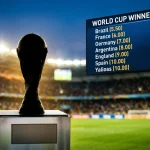
The market structure right now looks like this at the top end. France and England sit in the 5.00-6.00 range across most Australian bookmakers. Argentina and Brazil are a shade longer, typically 6.50-8.00. Spain hover around 7.00-8.00 depending on the shop. Germany and the USA occupy the 10.00-15.00 band, with the hosts getting a significant home-advantage bump that I think is approximately right. After that, the field opens up — and it is in the 15.00-30.00 range where the real work happens.
Outright Winner Market Snapshot
| Tier | Teams | Typical Odds Range | Implied Probability |
|---|---|---|---|
| Favourites | France, England | 5.00 - 6.00 | 17% - 20% |
| Contenders | Argentina, Brazil, Spain | 6.50 - 8.00 | 12.5% - 15.4% |
| Home advantage | USA, Germany | 10.00 - 15.00 | 6.7% - 10% |
| Dark horses | Portugal, Netherlands, Colombia | 15.00 - 30.00 | 3.3% - 6.7% |
The Value Docket
Strip the bookmaker's margin out of any football market, adjust the fair price with the five structural factors I use, and get a locked stake in AUD. Built for punters who cannot touch an in-play market online.
Enter every outcome in the market — all three legs of a match, or the full outright board. The margin only comes out cleanly when the book is complete.
The cut is never spread evenly. Longshots carry far more of it than favourites — which is why a 30.00 roughie is a worse price than it looks. Hatched section = the bookmaker's take on that leg.
Fair price is where the market sits with the margin removed. This is where you disagree with it. Each factor shifts the log-odds by a fixed published weight — nudge only what you can actually justify.
- Price offered
- —
- Fair price
- —
- Market's implied chance
- —
- Your adjusted chance
- —
- Break-even chance needed
- —
- Edge
- —
Enter a market to begin.
Online in-play betting is banned in Australia. Once the whistle goes you cannot trade out, cash out or hedge from your phone — so size this stake as money you are prepared to leave on the table for the full ninety.
My value picks live in two zones. First, Spain at anything above 7.50. Their squad is absurdly young — Yamal will be 18, Pedri 23, Gavi 21 — and that youth wave hit its stride at Euro 2024 with a dominant tournament win. The market still treats them as a step below France and England, but the on-pitch evidence says otherwise. Spain's positional play under their current system creates the kind of controlled possession that travels well across different opponents and different conditions, which is exactly what you need over seven matches in a North American summer.
Second, Portugal in the 17.00-22.00 range. The post-Ronaldo transition has not been the cliff-edge many predicted. Bernardo Silva, Rafael Leao and a defensive spine built around Ruben Dias give them the balance required for knockout football. Their group (K) is manageable, and a kind Round-of-32 draw could set up a run. At 20.00, the implied probability is 5% — I think their true chance is closer to 8%, and that difference is enough to make the bet positive expected value over a large enough sample.
Where I see traps: Argentina at 6.50 or shorter. The defending champions carry a premium that reflects their 2022 triumph more than their 2026 squad composition. Lionel Messi's involvement at 38 years old — even as a bench option or ceremonial presence — inflates the price beyond what the underlying talent justifies without him at peak output. The squad is still world-class, but the price suggests they are a co-favourite with France, and I disagree with that assessment.
England at 5.00 is another market I would avoid despite their talent. Two consecutive European Championship finals (2021 and 2024), both lost, suggest a psychological ceiling that the odds do not account for. Tournament football punishes sides that cannot close out tight matches, and England's record in those moments is troubling. At 5.00, you are paying for potential rather than evidence — and I prefer evidence.
Outright bets placed now carry better value than those placed during the tournament. Lines tighten as information increases, and the bookmakers' margins shrink on favourites while expanding on roughies. If you have a view on the winner, the time to back it is before the squad announcements in May.
Outright markets are the long game. But for most Aussie punters, the emotional centre of this tournament is closer to home — in Group D, where the green and gold face a brutal draw.


The Socceroos Verdict
I was in a pub in Melbourne when Mathew Leckie scored against Denmark in Qatar to send the Socceroos into the Round of 16 for the first time since 2006. The place erupted — beer went everywhere, strangers hugged, and for about ninety seconds every person in the room genuinely believed Australia could win the whole thing. We could not, of course. Argentina put four past us in the next round. But that night in 2022 rewired something in the Australian football psyche: the Socceroos belong at World Cups, and they can compete in groups that look difficult on paper.
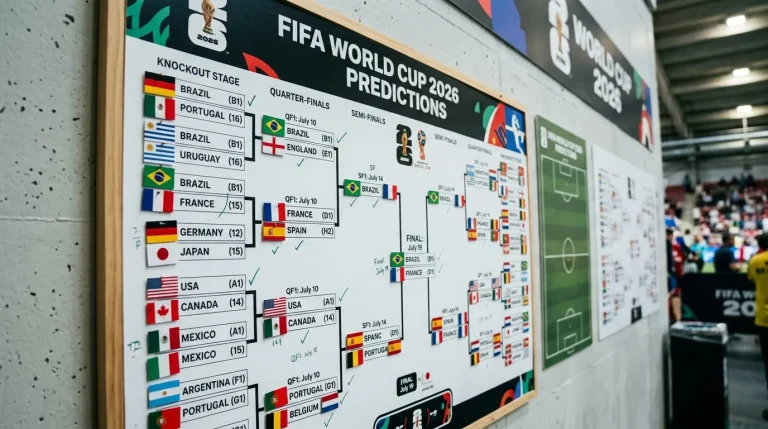
Group D at the 2026 World Cup tests that belief harder than Qatar ever did. The USA have home advantage and a squad that has matured since their 2022 campaign. Turkiye are back at a World Cup for the first time since 2002, loaded with elite club talent — Arda Güler at Real Madrid, Hakan Çalhanoğlu running Inter Milan's midfield. Paraguay earned their spot through CONMEBOL qualifying, which remains the most gruelling pathway in world football. There is no weak team in this group, no free three points, no match Australia can afford to take lightly.
2nd — Australia's finish in Group D at Qatar 2022, ahead of Denmark and Tunisia, securing a place in the Round of 16 for just the second time in history.
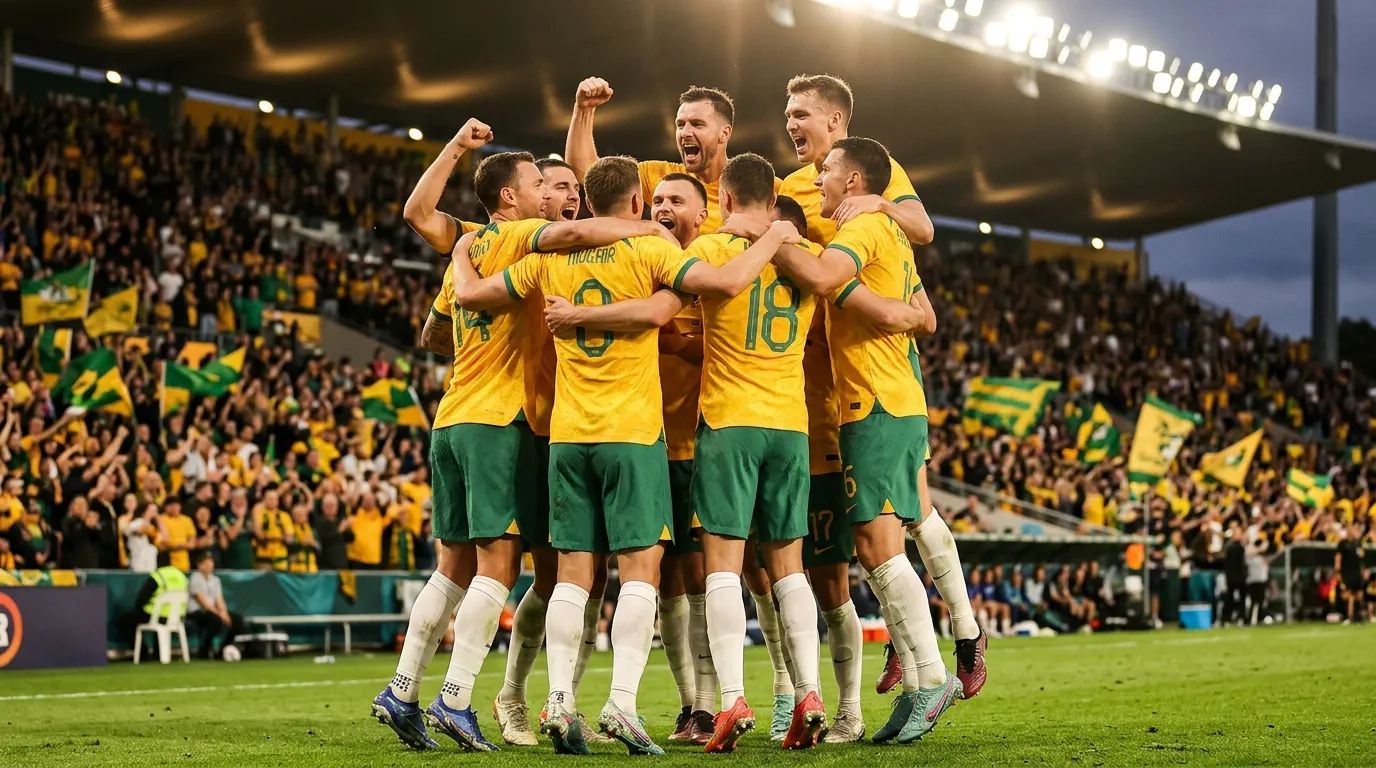
The schedule works in Australia's favour in one specific way: all three matches are on the US west coast. The opener against Turkiye takes place at BC Place in Vancouver on 13 June (14:00 AEST), followed by USA at Lumen Field in Seattle on 19 June (5:00 AM AEST the following day), and Paraguay at Levi's Stadium in Santa Clara on 25 June (12:00 PM AEST the following day). The proximity of these venues means minimal travel between fixtures — a logistical advantage that compounds over three matches and three recovery cycles. The base camp in Oakland, California sits within a short flight of all three stadiums.
My detailed Socceroos odds breakdown covers the squad, match-by-match previews and specific value bets. The summary here: I rate Australia at 5/10 on my power scale, which sounds harsh until you consider the field. A 5/10 at a 48-team World Cup places the Socceroos in the top half of participants, and in a group where third place likely qualifies, that is a pathway — not a pipe dream.
The opener against Turkiye is the match that shapes the campaign. A win there, and the maths tilt in Australia's favour even if the USA match goes badly. A loss, and suddenly Paraguay becomes a must-win fixture with no margin for error. I would back Australia to take something from the Turkiye match at the prices currently available, particularly in the Asian handicap market where the Socceroos' defensive discipline under current coaching translates into a half-goal edge that the market undervalues.
Australian viewers get an unusually kind schedule at this World Cup. With matches kicking off between 5:00 AM and 3:00 PM AEST, the 2026 tournament avoids the middle-of-the-night fixtures that plagued European-hosted World Cups. SBS will broadcast all 104 matches free to air.
The honest assessment: getting out of Group D would be a significant achievement. Reaching the quarter-finals would be historic. Winning the tournament remains a fantasy I enjoy after three beers but do not back with real money. The value for Socceroos punters sits in group-stage markets — qualification, match results, and player-specific props where the bookmakers' models underweight Australian players they have not closely tracked.
The Aussie Betting Landscape for This Tournament
The regulatory ground shifted beneath Australian punters' feet on 2 April 2026, and if you missed the announcement, you need to catch up before June. The Albanese government unveiled the most significant gambling advertising reforms in Australian history — a suite of restrictions that will reshape how the industry communicates with punters by the time these rules take full effect on 1 January 2027. The World Cup falls in the transition window, which creates a peculiar environment: the tournament will be the last major sporting event under the current advertising regime.
The headline changes are sweeping. Live sport broadcasts will carry a complete ban on gambling advertising between 6:00 AM and 8:30 PM — which covers every daytime World Cup match for Australian viewers. Radio advertising faces restrictions during school commute hours. Online gambling ads will be limited to logged-in users over 18 who actively opt in. Celebrities and athletes can no longer front betting campaigns. Stadium signage, player jerseys and referee kits are all off-limits for bookmaker branding. Cross-promotion between commentary and odds — the kind of integration that has become routine in AFL and NRL broadcasts — is banned outright.
The Interactive Gambling Act 2001 remains the federal framework governing online betting in Australia. Key rules for World Cup punters: online in-play betting is prohibited (phone betting only), credit cards and cryptocurrency cannot fund betting accounts (since June 2024), and the minimum legal age is 18. BetStop — the national self-exclusion register — has been operational since 2023.
For practical purposes, here is what the 2026 World Cup betting experience looks like for an Aussie punter. You can place pre-match bets through any licensed bookmaker's app or website using a debit card or bank transfer. You cannot place in-play bets online — if you want to bet on a match after kickoff, you need to call the bookmaker's phone line, which is a deliberately friction-heavy process designed to slow impulsive wagering. Decimal odds are the standard format across all Australian platforms, so every number you see on this site maps directly to what your bookie shows you.
The currency is AUD, and every example I use across the site is denominated accordingly. When I say a A$50 stake returns A$375 at odds of 7.50, I mean exactly that — no conversion required, no ambiguity about which market I am referencing. The World Cup betting markets guide covers the specific market types available through Australian operators, including multi-bet construction, which remains the most popular bet type in the country despite being — in my professional opinion — the most consistently misused.
One final note on responsible gambling. Australia lost A$31.5 billion to gambling in 2022-23. That number is not a scare tactic; it is a context that every punter should hold in mind during a tournament that will generate enormous emotional momentum over 39 days. BetStop exists. Deposit limits exist. The tools are there if you need them, and using them is not a sign of weakness — it is the smartest bet you will make all tournament.
Why Pre-Match Analysis Is Your Only Edge
I get asked constantly whether the in-play ban hurts Australian punters. My answer surprises people: it helps us. Not because the ban is good policy — the phone-only workaround is archaic — but because forcing all online betting into pre-match windows means the entire Australian market operates on analysis rather than impulse. And analysis, done properly, is where consistent profit lives.
In-play betting is reactive. You watch a team concede an early goal, the odds on the other side shorten, and the temptation to chase value on a comeback feels irresistible. The bookmakers know this — their in-play margins are wider precisely because they are pricing in emotional decision-making. Pre-match betting strips that dynamic away. Every bet you place is a product of research, modelling and considered judgement made hours or days before kickoff. The emotional noise of the match itself cannot reach your wallet.
Asian Handicap — a market that eliminates the draw by applying a goal handicap to one team. Half-goal lines (e.g., -0.5, +1.5) ensure a definitive outcome, making it the sharpest pre-match market for tournament football.
My pre-match method for World Cup matches rests on three pillars. First, I model expected goals using squad data, recent form and tactical matchups — not just results, but the underlying performance metrics that tell you whether a team is winning because they are good or because they have been lucky. Second, I compare my model's implied probabilities against the bookmaker's odds to identify where the market has overweighted narrative (home advantage, recent form, star players) and underweighted structure (defensive organisation, set-piece efficiency, squad rotation depth). Third, I time my bets to capture line movements — odds shift as squad news, weather conditions and public money flow into the market, and the window between squad announcement and kickoff is where the sharpest moves happen.
The 2026 World Cup amplifies the pre-match edge for a specific reason: the expanded format means bookmakers are pricing 104 matches involving 48 teams, many of whom they have limited data on. Curaçao, Haiti, Cabo Verde, Uzbekistan — these are not sides that European-based odds compilers have deep familiarity with. The information asymmetry between a punter who has watched Uzbekistan's qualifying campaign and a bookmaker relying on algorithmic inputs creates a gap, and that gap is exploitable before kickoff.
Australian punters who embrace pre-match discipline rather than resenting it have a structural advantage over the rest of the world's bettors, who are splitting their attention and bankroll between pre-match and in-play markets. The ban concentrates focus. It forces preparation. And preparation, over 104 matches across 39 days, is the only thing that separates a punter from a mug.
The online in-play ban is not a disadvantage — it is a filter that forces Australian punters into the one mode of betting where skill consistently outperforms luck. Every bet on this site is built around pre-match analysis for exactly that reason.
Questions I Keep Getting Asked
How does the 48-team format change World Cup betting?
The expansion from 32 to 48 teams introduces 12 groups of four instead of eight, and crucially, the eight best third-placed teams also advance to the Round of 32. This means group-stage elimination is harder — a single win might be enough to qualify. For punters, the impact is significant: group winner markets carry less value separation, "to qualify" bets become the sharper angle, and multi-bets built on group-stage results need to account for the reduced gap between second and third place. The format rewards consistency over brilliance, and that should inform every market you touch.
Can I place in-play bets on World Cup matches in Australia?
Not online. The Interactive Gambling Act prohibits Australian-licensed bookmakers from accepting in-play bets through websites or apps. The only legal way to bet on a match after kickoff is by calling the bookmaker's phone line. This restriction applies to all sports, not just the World Cup, and it is enforced at the operator level — meaning no licensed Australian bookie will offer a workaround. The practical consequence is that pre-match analysis carries even greater weight for Aussie punters, since every online bet must be placed before the referee's whistle.
What are the Socceroos' realistic chances at the 2026 World Cup?
Group qualification is a genuine possibility. Australia's Group D draw — USA, Turkiye, Paraguay — is demanding, but with the top two plus potentially the best third-placed team advancing, the Socceroos need one win and a draw to be in serious contention. The squad has improved since Qatar 2022, the west-coast scheduling minimises travel, and the tactical setup under current coaching favours the kind of disciplined, compact defending that frustrates higher-ranked opponents. A Round-of-16 appearance is the realistic ceiling; anything beyond that enters territory I would not back with money.
What format are odds displayed in for Australian betting?
Decimal odds are the standard across all Australian bookmakers. When you see odds of 3.50, it means a A$10 bet returns A$35 (including your original stake). To calculate implied probability from decimal odds, divide 1 by the odds: 1 / 3.50 = 28.6%. This format is simpler than the fractional odds used in the UK or the American moneyline system, and every odds reference on this site uses the decimal format that matches what your bookie displays.
When is the best time to place World Cup bets?
Outright markets — winner, top-four finish, golden boot — offer the best value when placed early, ideally before squad announcements in late May. Lines tighten as the tournament approaches because bookmakers have more data and public money compresses the odds on favourites. Match-level bets are best placed in the window between the official squad announcement and 24 hours before kickoff, when team news is confirmed but the market has not fully adjusted. Avoid the final hour before a match when recreational money floods in and distorts the odds away from true probability.
Are multi-bets a good strategy for the World Cup?
Multis are the most popular bet type in Australia and the most dangerous for your bankroll. Each leg you add multiplies not just the potential return but also the bookmaker's margin, which compounds exponentially. A four-leg multi at average odds carries a built-in house edge roughly double that of four individual bets. That said, multis constructed with discipline — correlated legs, value-positive selections, and strict leg limits — can work as a small-stake, high-reward strategy alongside your main bets. The key is treating them as entertainment, not as your primary approach to the tournament.
The Tournament I've Waited Nine Years to Cover
I started covering international tournament wagering in 2017, the year FIFA confirmed the 48-team expansion. Every World Cup since — Russia 2018, Qatar 2022 — has been a stepping stone toward this one. The format change alone would make the 2026 World Cup the most significant betting event of the decade. Add three host nations, the largest field in history, and a Socceroos squad that arrives with genuine knockout-stage ambitions, and you have a tournament that demands more preparation, more discipline and more analytical rigour than anything that has come before.
This hub page is the starting point, not the destination. The group ratings above give you a framework. The outright analysis narrows the field. The Socceroos verdict tells you where I stand on the team that matters most to Australian punters. But the real depth — match-by-match previews, market-specific strategies, team profiles for every contender and my tournament predictions — lives in the pages linked throughout this breakdown. I have built this site to be the resource I wished existed when I placed my first World Cup bet over a decade ago: opinionated, data-driven, and designed specifically for punters who operate under Australian rules.
The 2026 World Cup betting market is still forming. Odds will shift as squads are announced, injuries emerge and preparation matches reveal form. What will not shift is the structural reality: 48 teams, a new format, and an Australian betting environment where pre-match analysis is the only legal edge. If you are reading this before June, you are already ahead of the punters who wait until matchday one to start paying attention. The work happens now. The rewards come later. And I will be here covering every angle, every line movement and every opportunity from the opening whistle at the Azteca to the final at MetLife.
