
BC Place World Cup Guide: Where the Socceroos Campaign Begins
 Available in US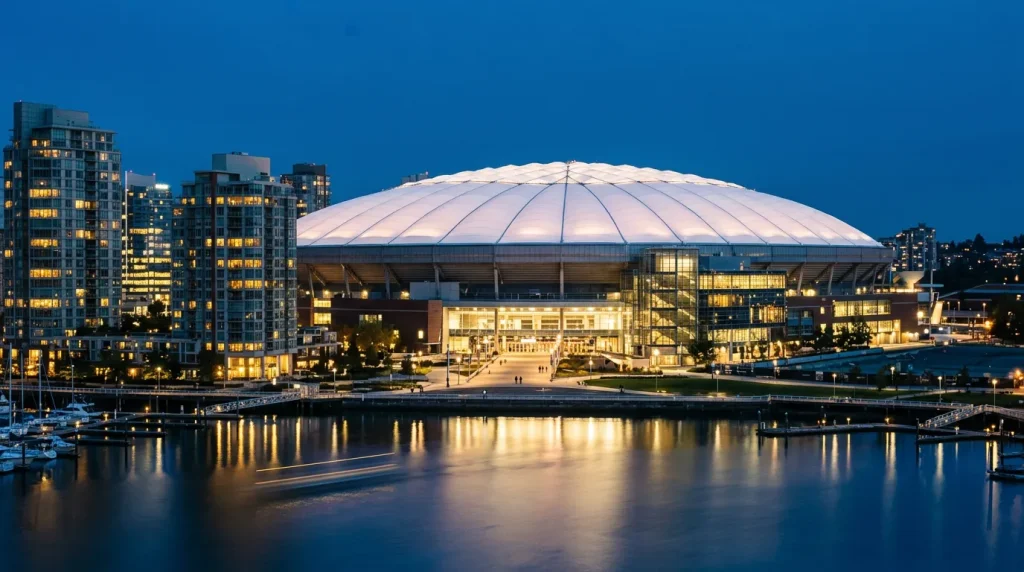
Table of Contents
There is a particular kind of nervous energy that builds in the hours before your country’s first match at a World Cup. I felt it in 2022 when the Socceroos lined up against France in Al Janoub Stadium, and I will feel it again on 13 June 2026 when Australia walk onto the pitch at BC Place in Vancouver to face Turkiye. The venue for our opening Group D fixture is a retractable-roof stadium on the waterfront of one of Canada’s most liveable cities, and its characteristics – climate-controlled, modern, compact – will shape a match that could define the Socceroos’ entire tournament trajectory. For Australian punters, understanding BC Place is not stadium trivia. It is match preparation.
BC Place is one of two Canadian venues at the 2026 World Cup, alongside BMO Field in Toronto. Vancouver’s selection reflected the city’s multicultural population, its established football culture through the Vancouver Whitecaps in MLS, and the stadium’s modern infrastructure following a major renovation completed in 2011. The retractable roof is the headline feature for punters – it eliminates weather as a variable, guaranteeing consistent conditions regardless of what the Pacific Northwest decides to throw at the city in mid-June.
BC Place: Vancouver’s Retractable-Roof Arena
I spent an afternoon researching BC Place’s technical specifications after the Group D fixtures were announced, because roof status at a retractable-roof venue directly affects my match models. When the roof is closed, the atmosphere intensifies – sound reverberates off the ceiling, the air becomes still, and the conditions favour teams that thrive in controlled environments. When the roof is open, the stadium breathes, the natural light changes the broadcast quality, and wind patterns from False Creek can influence long-range passing and set-piece delivery. FIFA’s decision on whether to play the Australia versus Turkiye match with the roof open or closed will be worth monitoring in the days before kickoff.
The stadium’s capacity for World Cup configuration is expected to be approximately 54,000 – the smallest of any venue hosting a Group D fixture, which works in favour of atmosphere density. A 54,000-seat stadium at 90% capacity produces more consistent crowd noise than an 80,000-seat stadium at 70% capacity, and that acoustic effect matters for teams like Turkiye, whose supporters are among the most passionate in world football. If the roof is closed and the Turkish contingent fills their allocation, BC Place could feel more like Istanbul than Vancouver. For the Socceroos, who are accustomed to playing in front of modest crowds in Asian qualifying matches, the noise level will be a factor – not a decisive one, but a factor nonetheless.
The playing surface at BC Place is artificial turf during the regular MLS season, which means FIFA will mandate a temporary natural grass installation for the World Cup. Vancouver’s mild June temperatures – averaging 17-20 degrees Celsius – provide near-ideal growing conditions for temporary turf, and the city’s experience hosting international football fixtures through the Whitecaps gives the ground crew institutional knowledge that some US venues lack. I expect the surface quality at BC Place to be among the best of any temporary installation at the tournament, which benefits technically proficient teams. Both Australia and Turkiye emphasise ball-on-the-ground passing, so a high-quality surface works in both teams’ favour without creating a differential advantage.
Australia vs Turkiye: The Opener Details
Matchday one for the Socceroos falls on Friday 12 June local time – Australia versus Turkiye at BC Place, with a kickoff at 9:00 PM PDT (2:00 PM AEST on Saturday 13 June). The late evening slot in Vancouver creates a prime-time atmosphere, with the stadium lights creating the kind of visual spectacle that FIFA prefers for marquee group-stage fixtures. The late kickoff also means cooler temperatures inside the stadium, reducing any heat-related fatigue that might otherwise affect the final 20 minutes of the match.
This fixture carries enormous weight for both teams. For Australia, a win in the opener would put the Socceroos in a commanding position to qualify from Group D, with matches against the USA and Paraguay still to come. A loss would not eliminate them – the third-place pathway provides a safety net – but it would create pressure heading into the USA match in Seattle that could affect squad morale and tactical approach. For Turkiye, returning to the World Cup after 24 years means their opening match carries emotional significance that transcends the three points on offer. I expect both teams to approach this fixture with caution, prioritising defensive structure over attacking adventure, which has implications for the total goals market.
The head-to-head record between Australia and Turkiye is sparse – they have met only a handful of times in the past two decades, most recently in friendly fixtures that offer limited predictive value. What matters more is the tactical matchup. Turkiye’s strength lies in technical midfield play and creative individual quality, particularly through Arda Güler’s ability to unlock defences with a single pass. Australia’s strength lies in collective pressing, defensive organisation and the ability to absorb pressure before hitting on the counter through pace in wide areas. The tactical clash points toward a match where the first goal carries outsized importance – whichever team scores first will be able to retreat into a structure that suits their defensive profile, forcing the opponent to take risks to find an equaliser.
From a betting perspective, I am watching three specific markets for this match. The under 2.5 goals line should be priced around 1.75-1.85, and I consider anything above 1.80 to be value given the tactical profiles of both teams and the opening-match caution factor. The draw at 3.20-3.40 is my second point of interest – opening World Cup fixtures between evenly matched teams produce draws more frequently than the market typically prices, and a 0-0 or 1-1 result would not surprise me. My third angle is the Socceroos to qualify from the group, which I have discussed elsewhere but which gains additional context from the BC Place venue assessment: a controlled environment on a quality surface in mild conditions suits Australia’s game plan for this specific match.
Kickoff Timing for Australian Viewers
The single most important number for every Australian football fan planning their World Cup schedule: 2:00 PM AEST on Saturday 13 June. That is when Australia versus Turkiye kicks off in Australian Eastern Standard Time. For a nation accustomed to setting 3:00 AM alarms to watch World Cup matches, a Saturday afternoon kickoff is a gift. Pubs will be full. Lounge rooms will be packed. The collective experience of watching a Socceroos World Cup match during daylight hours is something most Australian football fans have experienced only a handful of times.
For punters specifically, the AEST timing creates a tactical advantage that I want to emphasise. The pre-match markets for this fixture will be active during the Australian morning on Saturday 13 June. Team news typically drops 60-90 minutes before kickoff, which means confirmed lineups will be available around 12:30-12:45 PM AEST. That gives you 75 minutes to assess any surprises – a key midfielder rested, an unexpected formation change, a late injury withdrawal – before the markets close. In my experience, the window between team news and kickoff is where the sharpest value emerges, because the bookmakers adjust their lines quickly but not instantaneously. If you are set up to act on team news within 10-15 minutes of its release, you will occasionally catch lines that have not yet adjusted to a significant squad change.
Western Australian viewers get an even more comfortable slot: 12:00 PM AWST, a Saturday lunchtime kickoff. Central Australia at 1:30 PM ACST. Across the entire continent, the Socceroos’ opening match falls within prime viewing hours – a scheduling luxury that reflects the west coast US and Canadian venue allocations for Group D. The second match, against the USA in Seattle, kicks off at 5:00 AM AEST the following Saturday, which is less convenient but still manageable for dedicated fans. The third match, against Paraguay in Santa Clara, starts at 12:00 PM AEST on a Friday. All three Socceroos group matches are accessible to Australian viewers without requiring a complete overhaul of their sleep schedules, which is unprecedented for a World Cup hosted outside Asia or Oceania.
The Starting Line for Green and Gold
BC Place in Vancouver is where the Socceroos’ 2026 World Cup story begins, and the venue’s characteristics – retractable roof, quality temporary surface, compact 54,000-seat capacity – create conditions that suit Australia’s tactical approach for an opening fixture against Turkiye. The 2:00 PM AEST Saturday kickoff puts the match in the heart of the Australian weekend, giving fans and punters alike the rare luxury of experiencing a World Cup opener in real time without sleep deprivation. I will be watching from my desk with the pre-match markets open on one screen and the broadcast on another, looking for the same small edges that have sustained my tournament betting across nine years of analysis. BC Place is where it starts. What happens there shapes everything that follows in Group D.
